
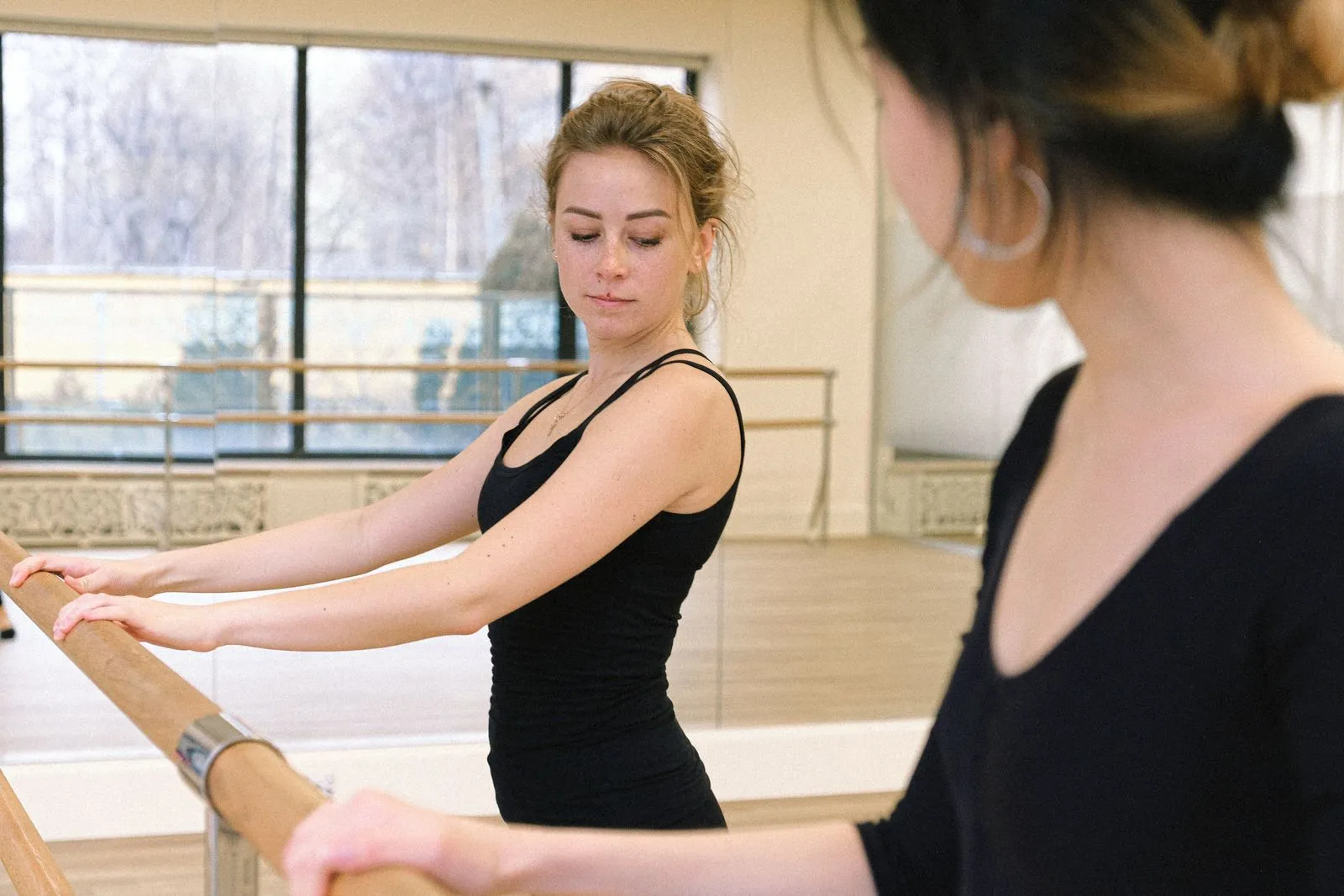
A little preparation can make your first barre class feel more comfortable. Most studios provide the equipment used during class, such as a barre, mat, or light hand weights, but policies vary. Check the studio’s instructions before you leave home, and pack a few personal essentials: grip socks, water, and clothing that lets you move freely. Arriving a little early also gives you time to settle in, ask questions, and learn where to place your belongings.
Choose Grip Socks
Grip socks have small traction grips on the soles to help your feet stay steady on a studio floor. They can be especially useful during standing balance work and exercises at the barre. Choose a pair that fits securely without bunching inside the toes or sliding at the heel. If you already own a pair, check that the grips are intact and the socks feel comfortable when you point and flex your feet.
Studio rules differ: some require grip socks, while others allow bare feet or offer socks for purchase. Confirm the policy before class rather than assuming regular athletic socks are suitable; smooth soles can slip. If you are unsure what to buy, ask the studio which styles work well on its flooring. Bring a clean pair in your bag so you can change after traveling to class.
Bring Water
Pack a filled, reusable water bottle and keep it where the instructor says to place personal items. Barre classes use controlled, repeated movements that can feel demanding even when you stay in one spot. Having water nearby makes it easier to take a drink during an appropriate pause. Follow the instructor’s guidance and avoid leaving a bottle where someone could trip over it.
You generally do not need a sports drink or a special supplement for a regular class. If you are coming straight from work or errands, drink water beforehand as well, especially if you have not had much to drink during the day. If you have specific hydration needs, follow advice from your health care professional.
Wear Clothes That Move
Choose fitted, stretchy clothes that stay in place as you bend, reach, and work at the barre. Leggings or comfortable athletic pants with a supportive top are practical options. Very loose fabric can shift during floor exercises or make it harder for the instructor to see your alignment. You do not need specialized barre clothing; prioritize comfort, coverage, and freedom of movement.
Dress in light layers if you tend to feel cool before class or need a layer for the trip home. Tie back long hair so it stays out of your face, and leave jewelry or accessories that may catch on clothing or equipment at home. If you have an injury, mobility concern, or pregnancy-related question, contact the studio before class so you can ask about suitable modifications.
Arrive Ready to Start
Plan to arrive early enough to check in, store your belongings, and get oriented without rushing. For a first visit, allow extra time to introduce yourself to the instructor and mention that you are new. Ask where to set up and whether the studio provides mats or other equipment. This helps you start in the right place and follow instructions from the beginning.
Before leaving, review the studio’s booking and cancellation details, confirm its address, and bring any required access information. Keep your phone silenced and stored during class. If you are unsure about anything—especially footwear, equipment, or arrival procedures—check the studio’s current guidance rather than relying on assumptions.
For a barre class, start with grip socks, a water bottle, and comfortable fitted clothing, then check the studio’s equipment and arrival instructions. A little extra time helps you get settled and ask questions before class begins. Review Cincinnati Barre Strength’s current class guidance before your visit so you know exactly what to bring.